Monday, July 31, 2006

Give France Back to Germany

So, did y'all hear the latest bit of wisdom to be spouted out by a representative of the French government?

No?

"In the region there is of course a country such as Iran – a great country, a great people and a great civilization which is respected and which plays a stabilizing role in the region,"

– French Foreign Minister Philippe Douste-Blazy in Beirut on July 31, 2006.


Now, when he said these things earlier today, Monsieur Douste-Blazy might have been overlooking Iran's sponsorship of Islamic terrorism as embodied by Hizballah in Lebanon, a group which has subjected "a friend of France" (a.k.a. one of many screwed-up former French colonies) to ruin and destabilized the region once more.

To read
Douste-Blazy's comments and then read the following comments by President Ahmadinejad of Iran, recorded for posterity over the last nine months or so (including one, second to last, this past week), is to see that his comments are yet another, dangerous French delusion:

“Anybody who recognizes Israel will burn in the fire of the Islamic nation's fury.”

“Our dear Imam said that the occupying regime (Israel) must be wiped off the map and this was a very wise statement.”

“The Zionist regime is a decaying and crumbling tree that will fall with a storm.”

“He who sows the wind will reap a hurricane and this will be a very strong storm in the whole Middle East region, which will strike painfully…”

“We thank God that our enemies are idiots.”

Yeah, them Iranians have a right mighty stabilizin' role in this here Mideast...not.


Those idiots, the French, don't know when to shut up. The French are destabilizing enough as it is.

Enough is enough.


I've thought long and hard about all this, and figured out a solution to the enigma of the French. One might call them a plague, though I'll personally leave the "frogs as plague" line for Passover. Moving on, this upcoming proposal of mine would likely solve most of the world's pressing problems, or at least pave the way for the many problems plaguing (whoops, guess I used it) this, our planet, to get solved more quickly than they normally would.

It first came to me in the midst of a fight my French ex-girlfriend, Sophie Chetrit, started with me way back in September 2004. I told her that if Germany took over France again we (America) would not come to rescue the French again. I know, it was stupid and inaccurate. So was the fight.

Saying what I said was inaccurate...but does it re
ally have to be?

No. In fact, what I propose would be something similar, but much less violent, than the surprise "Can I talk to you?" punch to the face Sophie had given me not long before I said what I said to (or rather, yelled at) her. What a soap opera that relationship was…


Anyway…my proposal?


The End of France


We took France away from Germany towards the end of the Second World War. We fought long and hard for it, but the Germans earned it just as much as we did, really. The Germans certainly deserved France more than the French then, since the Germans fought for it so much harder in 1940 than the French did.

So I say we give France back to Germany. Yes, that's right, let’s give Frankreich back to Deutschland. If the ungrateful sods in Paris, Marseille, Lille, Lyon and oh, what the hell
– Vichy too – want to do anything they can to endanger international order, they don't deserve their sovereignty anymore. It’s not like they’ve really done anything constructive with their sovereignty since the Allies who didn’t lose World War II right from the get-go enabled them to have it again.

I say the French are ungrateful, yes, because hundreds of thousands of brave American, Brit
ish, Canadian (and Free French) soldiers risked their lives in 1944 and 1945 so that France - and Europe - could one day be free of Nazi occupation...and ever since that time, whether it's been their leaving NATO in the 1960s or praising state-sponsors of terrorism in the 21st century, they've proven quite well that they're just plain trouble.

They do whatever they can to obstruct their former liberators, and you can’t use the argument “Well, they helped us win the Revolutionary War!” with me, because the very first war the United States fought once peace was achieved with Great Britain was, you guessed it, fought against France on the high seas. They tried multiple times before the Civil War to split the Union, and very nearly recognized the Confederacy.

Though they reneged on paying back war debts to Ame
rica from World War One, they squeezed the Germans for reparations in the 1920s as revenge for the Franco-Prussian War in the 1870s – a war the French started, lost, and which resulted in the formation of the German Empire.

The French have never respected international norms, and for anyone who ha
s ever heard the French admonish the United States of America, or Israel, or anyone else on the need to respect international norms, well…this is incredibly funny. Sad, but funny. They restrict the ability of democracy to spread, and pay no mind to the needs of others.

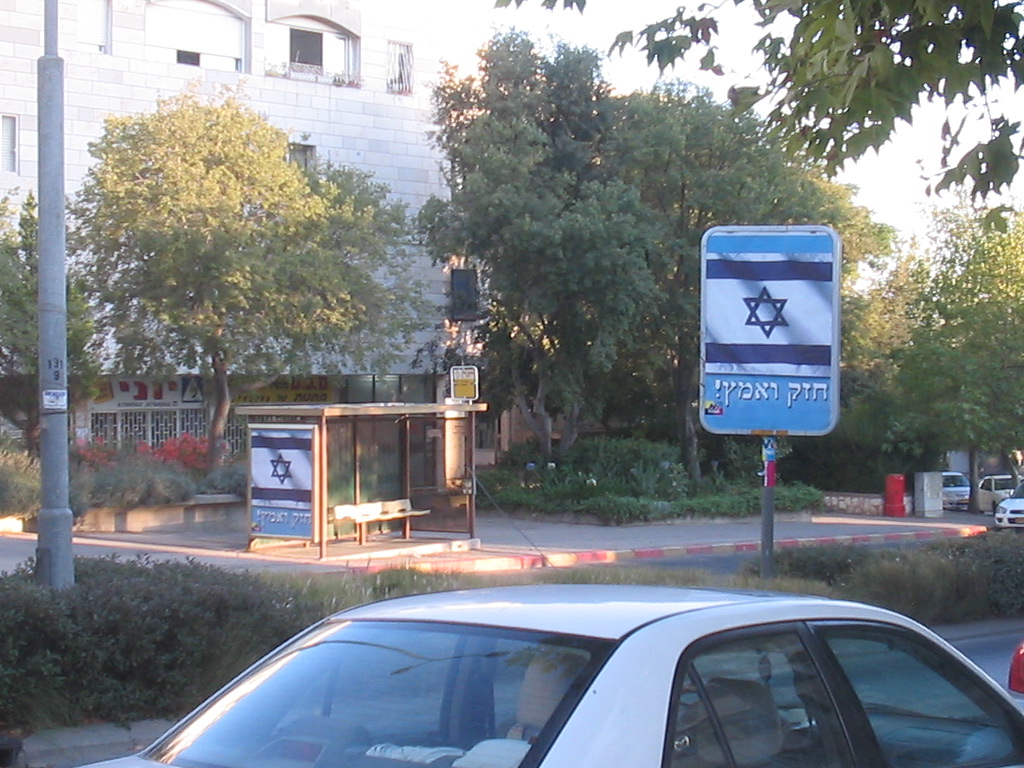
Click on the picture if you can't see the "h" after "bus". How creative. It's why I took it.


The French are not simply “the French”, as John Kerry once said. They are incredibly selfish, self-interested; they're just too dangerous to be allowed to run around free anymore, as "French".

Thus, France should be taken over by Germany.

Germany isn't the same as it was the last time it owned France. It is a country that now has a right to be proud of itself, even with its dark past. It could be a fair and effective administrator of affairs in Frankreich. And, it could teach the former French a thing or two about combating anti-Semitism...which the current French just don't seem to want to do.

The Federal Republic of Germany proved capable, although it was at times difficult and costly, of integrating
West Germany and East Germany after the Berlin Wall came down and the
regime in the so-called “German Democratic Republic” fell.

"Wait," you might ask. "How can you give France to Germany? You don't own it."


Ah, yes this is true. Not so much a problem, though.


There are remedies to this particular state of affairs. Once again (see last blog entry), we need o
nly look to the 40th President of the United States for inspiration and a spot of humor, and the solution presents itself:

"My fellow Americans, I'm pleased to tell you today that I've signed legislation that will outlaw Russia forever. We begin bombing in five minutes." - President Ronald Reagan, August 11, 1984

(By the way, you can click on http://www.npr.org/news/specials/obits/reagan/audio_archive.html to hear this line for yourself. Scroll down a bit to find, and make sure you have Real Player for, this famous sound-check joke. The Soviets weren't all that amused.)

Change "Russia" to "France", soften 'em up a bit, and then give the Germans the go-ahead..
.and that's how to give France back to Germany. I said before it wouldn't be too violent...it is France they'd be fighting. The French can sucker-punch. I can personally attest to that. But as World War II, and Indochina (Vietnam), and Algeria (among others) showed...they suck at winning. The Germans would, as in 1940, probably be able to march right in once the French've surrendered.

It'd be so fast...blitzschnell fast...the French wouldn't have time to use their nukes.

Speaking of which, I’ll be honest with you – I trust the Germans with nuclear weapons more than the French anyway.
This is relevant, as the Germans would of course gain control of the French nuclear arsenal after any takeover. Since the French military isn’t really good for all that much anyway, French units could just be absorbed into the German Bundeswehr, a.k.a. the German Federal Armed Forces, or just be disbanded or, for the sake of preserving order (given the example in Iraq after that army was prematurely disbanded) turned into well decked-out gendarmes.

I think the European Union would be able to adjust fairly well to the disappearance of France. The absence of a French Republic wouldn’t fix everything about the EU, but with the outrageous farm subsidies demanded by Paris no longer forced upon Brussels, some major economic hurdles could be finally leaped. No longer would Europe be forced to hear about “dangerous Anglo-Saxon” conspiracies of one kind or another. Post-France, the EU could think for itself about the path it should take, since French manipulation would no longer be an issue.

There would be no need for discussions or negotiations on Germany gaining a permanent seat on the Security Council of the United Nations, as Germany would inherit France’s seat.


Not Everything Need Go to the Deutsch

The régions of Haute-Normandie and Basse-Normandie would remain outside of German control. America, Britain and Canada would split these regions of Normandy between them. After all, tens of thousands of Yanks, Limeys and Canucks sacrificed their lives on the beaches, fields and hedgerows of Normandy to get rid of the Nazi occupiers in June 1944. It would only be fitting that as the various regions of France became the newest states of the reformed, democratic Bundesrepublik Deutschland, one special area remained separate, under international administration, as a permanent reminder of the former French state’s military impotence.

The collectivité territoriale of Corsica, the island birthplace of former French dictator-emperor Napoléon Bonaparte and a région long simmering under French control, would finally get the independence Corsicans have agitated for over the years (unfortunately, often by resorting to violent means). International support would be needed to ensure that Corsu, the native language of Corsica, doesn’t disappear.

Back on the mainland, historic Brittany, which used to be a kingdom in its own right and is currently split between the régions of Bretagne (80%) and Pays-de-la-Loire (specifically, the Loire-Atlantique département of Pays-de-la-Loire – constituting the remaining 20% of historic Brittany, with the city of Nantes), would gain independence and international recognition.

As for Monaco, a sovereign country linked closely with France in a number of ways, Prince Albert II would no longer have any need to consult with Paris over who the principality’s Minister of State (head of government) should be. As there would no longer be any French citizens, only a Monegasque would be considered for the position of Minister of State (before 2002, the Minister of State of Monaco had to be a French citizen, but later Monaco’s Constitution was changed so that the position could be held by either a French or Monegasque citizen).

Monaco
would, for the first time since the Treaty of Versailles in 1919,
Treaty of 1945, and the Agreement of 1963, be given the support to forge its own path.

The French départements d'outre-mer, or Overseas Departments, of Guadeloupe, Martinique, French Guiana and Réunion island would be offered independence, or if they so wished they could become overseas territories of the Federal Republic of Germany (necessitating a renaming of French Guiana).

Speaking of Overseas Territories, the French Southern Territories (also known as the “Territory of the French Southern and Antarctic Lands”, or Terres australes et antarctiques françaises) would either be directly administered by Germany or, in the case of Adélie Land, merely watched over in keeping with the Antarctic Treaty; while Germany was not a signatory to the Antarctic Treaty (which among other things banned territorial claims to the continent of – you guessed it – Antarctica), Germany would inherit the former France’s treaty obligations just as the Russian Federation inherited the treaty obligations of the former Soviet Union.

So to sum up…Corsica and Brittany would gain independence, Monaco would no longer be under the yoke of Paris, and the overseas departments would be given the choice of German statehood or independence.


Easing the Financial Burden

In order to help Germany shoulder the burden of integrating its newfound states in Western Europe, the United States and the World Bank would disburse financial aid to Berlin for as long as needed.

Language

French would not be outlawed, of course, but discouraged, as German would take precedence over French in schools, on government documents, and so on and so forth. Germany would become, in effect, kind of like Switzerland...only bigger. And stronger.

Resistance

No doubt, many French would vehemently resist the takeover of their country by the Germans, given the historic enmity between the two countries. This could take the form of terrorist attacks against German institutions and the defacement of American property. However, as there is a sizable (five million strong) Muslim community in France, co-opting the Mohammedans and carefully seeing to their needs could provide much needed stability in a vital demographic of the former French state.

Germany would be encouraged to refrain from neglecting the newest Muslims of Germany as France once did. As Germany has Muslim immigrant citizens of its own, it is possible that any official German methods of dealing with Muslims in the country would deal with those from France too.

An underground would likely emerge, and it is possible that a “government-in-exile” would be created. Of course, it will be important to remember in any case that the French will only begin to fight after they've been taken over, and then if - if - their country is liberated once more, they'll take credit even if they don't do much of the fighting.


In Conclusion


France has time and again demonstrated that it is not willing to play a constructive role in world affairs. While in its various forms the French government has extended aid to the United States and other countries, the times when France has acted antagonistically toward those who help her – sometimes even as they help her – far outnumber and outweigh the modern effects of past friendships. France has shown a willingness to consort with dictators more openly than other democracies (President Jacques Chirac has more than once referred to Saddam Hussein as a "personal friend"), and has a disturbing tendency to celebrate its own imperial, dictatorial past.

It is thus my opinion that France should cease to exist as a nation-state for the sake of all mankind. Certain areas, as shown throughout this, would become independent or come under international administration, but the vast majority of the territory/territories of what we know today as the “French Republic” would be absorbed by the Federal Republic of Germany. Germany is best suited to the task of absorbing its former rival, as it has experienced its own integration issues since the end of the Second World War and the Cold War. If anyone can keep the French in line and France in Ordnung, it is the Germans.

Moreover, this event would be for the own good of the French. Stability has never been a noticeable strength of the French nation-state, and the country’s stagnancy with reform is an example that is holding back the economic progress not only of France but also of the European Union. It limits the abilities of its own people to grow and develop as secure, self-assured people (that they are headstrong with little moral justification is already known).


Newly christened as Germans, the former French would learn how to combat the social disease of anti-Semitism from those who were once emblematic of what the most extreme forms of anti-Semitism can lead to.

In short, without an independent France the world might just be a better, safer and saner place.


In closing, how is it that I ever fell in love with, dated, or got engaged to, a French citizen?

Why did I stay so long with her?

Oh. Yeah. I remember why...because even with a disgusting cigarette in hand, she looked like this!


Damn the French!

Sunday, July 30, 2006

As History Repeats Itself

“…let us remember that our main goal and purpose is to achieve a broader peace in all of the Middle East.” – President Ronald Wilson Reagan; October 27, 1983

Many have by now likely seen the footage of the remains of a building destroyed in an Israeli Air Force strike on the southern Lebanese town of Qana. The world was quick to condemn Israel for the air strike, as many civilians were killed.

The world, though, conveniently forgets that as Israel – unlike Hizballah, Hamas and al-Qaeda – does not have a policy of targeting civilians, the only reason Israel would bomb anywhere in Qana is because Hizballah used buildings, or other areas in the city itself, to deliberately launch missiles at – you guessed it – Israeli civilians.

I wonder, and others should too if they haven’t before, why Israel is to be always held accountable for civilian deaths, especially when rarely – if at all – do those Arab nations or groups which make no secret that they target Israeli civilians get censured by anyone else other than the U.S. or, for that matter, Israel, unequivocally? European and U.N. condemnations routinely mention either both Israeli and Arab civilian deaths when they occur around the same time, or only the Arab deaths (or U.N. deaths). Smells like rotten fish, and it has for too long.

I’m talking about the type of rotten fish left in the back of a car for too long, as in the movie “Grumpy Old Men”…only this is no comedy.

This conflict – this war – began because Israel has lived for its entire existence with the threat of terrorism, and after waiting since 2000, finally took some seriously decisive action. Terrorism against Israel did not begin when Israel took over the “Palestinian” territories.

It began when, after hostilities – started by the Arab world – ended in 1949, countries like Egypt, Jordan, Syria and Lebanon funded Arab terrorists who snuck into Israel and attacked innocent civilians. This continued through to the 1956 war, and the 1967 war. Why did Israel take over the Golan Heights in 1967? It wasn’t for the sake of conquering it – it was because the Syrians routinely used the Heights to shell Israeli farms within firing range.

This war began because, time and again, the Lebanese, the Syrians, and the Iranians have all found one way or another to avoid being held accountable for their mistakes and their machinations. The United Nations has failed in this as well, as has the Arab world, and as have the United States, Europe, Great Britain, and Israel.

I did a little research this weekend, and found a very interesting speech given by the late U.S. President Ronald Reagan on October 27, 1983. Earlier in the day, a world away from Washington, Hizballah terrorists had driven a truck bomb into the U.S. Marines barracks in the Lebanese capital of Beirut, and had also carried out a near simultaneous attack on French paratroopers. 241 Marines, and many French, died in these attacks.

To read the lines from President Reagan’s speech then, and then to see the warfare happening once again in this region, and also to hear the speeches being given and the comments being recorded in our own time about how to bring about an end to the fighting, a person is bound to come away lamenting that we are simply repeating history here…and it could have been avoided. It could have been avoided, had Lebanon taken over its southern territory after the Syrian occupation last year. It could have been avoided, had Hizballah been disarmed.

Again, all of this death and destruction could have been avoided…and that it is now happening is not Israel’s fault.

We would not be so obviously repeating history now, if the world did not tolerate Arab-Muslim funding and supplying of those carrying out terrorism against Israel for so many years. Those who died in Qana today are like those who, many years ago, died in a very similar Israeli air strike in that same town that led to the end of Israeli operations in a much earlier operation against Hizballah.

Here are some of the opening lines from the speech President Reagan gave that October day (the italics between the quotes are my own comments):

“This past Sunday, at 22 minutes after six Beirut time, with dawn just breaking, a truck - looking like a lot of other vehicles in the city - approached the airport on a busy, main road. There was nothing in its appearance to suggest it was any different than the trucks or cars that were normally seen on and around the airport. But this one was different. At the wheel was a young man on a suicide mission.

The truck carried some 2,000 pounds of explosives, but there was no way our Marine guards could know this. Their first warning that something was wrong came when the truck crashed through a series of barriers, including a chain-link fence and barbed wire entanglements. The guards opened fire, but it was too late. The truck smashed through the doors of the headquarters building in which our Marines were sleeping and instantly exploded. The four-story concrete building collapsed in a pile of rubble.

More than 200 of the sleeping men were killed in that one hideous, insane attack. Many others suffered injury and are hospitalized here or in Europe. This was not the end of the horror. At almost the same instant, another vehicle on a suicide and murder mission crashed into the headquarters of the French peacekeeping force, an eight-story building, destroying it and killing more than 50 French soldiers.”

Food for thought, when it was just announced that the French are considering taking on a peacekeeping role in their former colony once again.

Anyway, President Reagan went on:

“I called bereaved parents and/or widows of the victims to express on behalf of all of us our sorrow and sympathy. Sometimes there were questions. And now many of you are asking: Why should our young men be dying in Lebanon? Why is Lebanon important to us?

Well, it's true, Lebanon is a small country, more than five-and-a-half thousand miles from our shores on the edge of what we call the Middle East. But every President who has occupied this office in recent years has recognized that peace in the Middle East is of vital concern to our nation and, indeed, to our allies in Western Europe and Japan.

We've been concerned because the Middle East is a powder-keg; four times in the last 30 years, the Arabs and Israelis have gone to war. And each time, the world has teetered near the edge of catastrophe.”

The President said of international efforts to bring peace to Lebanon,

"… the multinational force was created to help stabilize the situation in Lebanon until a government could be established and a Lebanese army mobilized to restore Lebanese sovereignty over its own soil as the foreign forces withdrew."

Would you just read that last bit over again? “…a Lebanese army mobilized to restore Lebanese sovereignty over its own soil as the foreign forces withdrew.” Lebanon did not do this under Syrian occupation, and Lebanon did not do this when the Syrians – at the time of their pullout last year, the only foreign forces there – left the country after the “Cedar Revolution”.

While President George W. Bush as reiterated his support for the Lebanese government this time around, President Ronald W. Reagan’s words echo the reasons behind today’s conflict:

"The clear intent of the terrorists was to eliminate our support of the Lebanese Government and to destroy the ability of the Lebanese people to determine their own destiny."

While this war was caused in part by the Lebanese failing to take control of their territory, it was also because Hizballah – a minority in the Lebanese government – carried out an unprovoked attack against Israel that dragged Lebanon once again into a war, a war the Lebanese government, and certainly the great majority of the Lebanese people, did not want.

“…and to destroy the ability of the Lebanese people to determine their own destiny.”

Hm.

These days, we’re hearing a lot about the need for a cease-fire; we also hear a lot about plans for what needs to happen when the guns do stop shooting, when the rockets do stop being launched, and when the bombs stop falling wherever they do fall.


What was the goal in the early 1980s? A little more from that Reagan speech should shed some light on this:

"What can we do now to help Lebanon gain greater stability...?"

"First, we will accelerate the search for peace and stability in that region."

"Second, we'll work even more closely with our allies in providing support for the Government of Lebanon and for the rebuilding of a national consensus."


What prophetic words came next?

We remember this line from the Great Communicator’s speech…as some in the world seem intent on still not holding Hizballah, or the Lebanese government, or Syria and Iran, truly accountable:

"If terrorism and intimidation succeed, it'll be a devastating blow to the peace process and to Israel's search for genuine security. It won't just be Lebanon sentenced to a future of chaos."

Rockets raining down on Israeli population centers – not military bases, but population centers. 330,000 people forced to leave their homes in an area of northern Israel often targeted by Hizballah long before this latest war. Bridges bombed in Lebanon. Chaos reigning as people tried to get out of a once-more war-torn Lebanon. Europe giving into intimidation, just as they have always shown they are ready to do.

Hmm. History is definitely repeating itself.

Speaking of the need to create a “new Middle East” more than two decades before Condoleeza Rice or anyone else said it, President Reagan during that October 27, 1983 address spoke then of the need for a lasting solution in this troubled region, and the need for the rest of the world to play a constructive role in bringing it about:


"Let us meet our responsibilities, for people of the Middle East have lived from war to war with no prospect for any other future. That dreadful cycle must be broken."

This cycle, obviously, has not been broken.

Alright, enough Italics for now.

This cycle has obviously not been broken, because the moment a Jew in/from Israel lifts a gun or drops a bomb in defense, Europeans and the United Nations question the right of Israel to defend itself. They give the Arabs the benefit of the doubt – out of fear, or anti-Semitism, or whatever – and place the burden of guilt on Israel’s shoulders. It is a burden that Israel has never deserved.

Israel certainly doesn’t deserve to be lectured on civilian deaths by Russia, a country whose president – in ordering Russian forces to take over Chechnya – has never shown concern for Muslim Chechen civilian deaths caused by his own forces. That he can for the Arabs, and not for Chechens...well, that's Moscow for you.

Talk about your gross, confused, double standards and hypocrisy.

Let's move on.

True to the adage that says “God helps those who help themselves”, Ronald Reagan had this to say in 1983 – and the words like so many others in this speech, apply today:

"Our role is to help the Lebanese put their country together, not to do it for them."

This war, in 2006, started because the Lebanese let the Syrians, and the rest of the Arab world, rebuild hotels and their capital without making Beirut fulfill previous agreements or fall in line with international requests. This war was bound to happen the moment that Syria left Lebanon and Beirut didn’t force Hizballah to disarm and leave the border with Israel, in keeping with UN Security Council Resolution 1559.

The Lebanese thought they could let Hizballah reign in the south, and participate in government in the north, and avoid the catastrophe that would surely follow. The past weeks have revealed their folly. Twenty-three years later, "...the multinational force was created to help stabilize the situation in Lebanon until a government could be established and a Lebanese army mobilized to restore Lebanese sovereignty over its own soil as the foreign forces withdrew," is a quote from a speech in 1983 that haunts us today.

I remind readers again that Lebanon, far from even trying to take over the south from Hizballah, deliberately chose not to. Whether this was because of the pro-Syrian leanings of the President of Lebanon, or a Prime Minister who didn't feel up to the task and responsibilities demanded of a national leader in a country like Lebanon, doesn't matter.

Even now, Lebanese official statements indicate that they not only have failed to learn from their own past mistakes, but still stubbornly refuse to take responsibility for them. Lebanon is keen on portraying itself as the victim, but it has been a willing victim. Like the Palestinians, the Lebanese government has become a willing pawn in the never-ending war against Israel.

“Poor us, poor us,” the Lebanese declare. And the world buys it.

It needs to be spoken of over and over again. And over and over again...this is not Israel's fault.

Lebanon is increasingly being reduced to rubble because the Lebanese government – and, for that matter, the Lebanese people – didn't take responsibility for their own affairs, and they were allowed to get away with it. When they couldn't take this responsibility under Syrian occupation, it was understandable. But even when finally permitted the chance, when the foreign occupiers left, they didn't do what the international community, in the form of a Security Council resolution, demanded they do...and that was a deplorable, deliberate choice on their part.

Those who died at Qana were only the latest to pay the price.

The world lacks the political will to hold Hizballah, or its backers, accountable. Weakness will let Lebanon, like a child, get away for its irresponsible actions with maybe a slap on the wrist. Their country is a wreck, after all.

Still, Israel has never deliberately targeted Arab civilians in warfare, making it wholly unlike those Arab countries and terrorist groups which have explicitly targeted – or supported the targeting – of Israeli civilians since 1948.Unfortunately, another war will be inevitable in this region so long as the world punishes Israel for accidentally killing civilians, while Arabs and Muslims are hardly even chastised for specifically targeting them.

Another war will be inevitable, and today’s words shown to be as prophetic about the future of the Middle East as Ronald Reagan’s once were, if Lebanon is allowed to shirk its responsibilities not only to the international community, and to its neighbors, but to its own people…and we should not forget that Hamas, a terrorist group, controls the Palestinian Authority. And the destruction in Gaza was caused when members of Hamas cooperated with others to tunnel into Israel and kill and kidnap Israeli soldiers. Where’s the accountability?

Right now, any cease-fire really worth having seems illusory. The Europeans, and others, are not holding Lebanon accountable for failing in its duties, and are hardly condemning the Hizballah rocket attacks on Israel. David is portrayed as Goliath, and Goliath as David. This is funny, because the last time I checked the Arab world outnumbers Israel by hundreds of millions to just seven million…or six million Jews, when taking the Arabs of Israel as part of the wider Arab world.

In any case, the prospects for a future war still appear very good.

I don’t think you need to be a prophet, or a President, to realize this is very bad.

The great Benjamin Franklin once said “There never was a good war or a bad peace.”

He might have been right, except for one thing…

Ben Franklin never lived in the Middle East.

“With patience and firmness, we can help bring peace to that strife-torn region—and make our own lives more secure.” – President Ronald Wilson Reagan; October 27, 1983

By the way...before September 11, 2001, Hizballah had killed more Americans than al-Qaeda.

Friday, July 28, 2006

The Noise and The Silence


“’Tis not to be, the swinging tree,” or so The Silence said.

“If only the winds of change would be, the future we would not dread.”


“The bombs of war, we’ve heard before,” said The Noise with resignation.

“Their crumps and drones, the scatter of bones, sacrifices of a nation.”


“For what is done, the blast of gun,” The Silence did remark.

“The damage wrought, the battle fought, the aftermath is stark.”


“Will we emerge, from the dirge?” asked The Noise with yearning.

“Our lives to live, our souls to give, all while the Earth is turning?”


“We fear the future with good reason,” and then The Silence sighed.

“With hate allowed, truth disavowed, ‘tis justice we do misguide.”